December 16, 2025
How to Become a Hairdressing Assessor
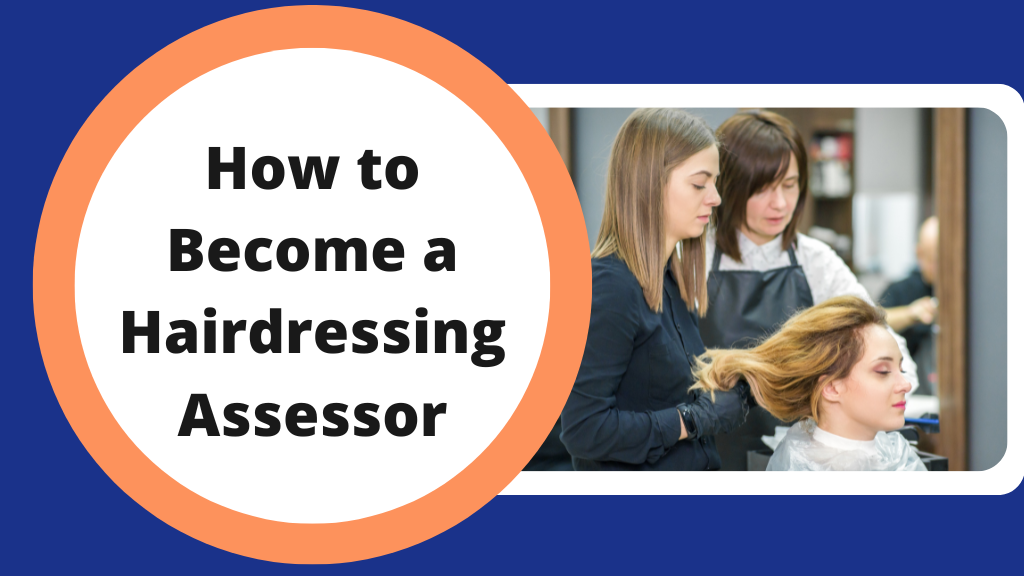
If you’ve spent years perfecting your cutting, colouring, and styling techniques, you’ll know that real skill in hairdressing comes from time, patience, and practice. But after years on the salon floor, you might feel like trying something new.
Perhaps you already guide junior staff, apprentices, or new starters, or you’re the one others rely on for reassurance when a colour correction goes wrong, or perhaps a client needs careful consultation. If that sounds familiar, an assessor course could be the next step for you.
What does a Hairdressing Assessor do?
A hairdressing assessor checks that learners meet the required standards in both practical and theory-based work. You’re there to assess learners fairly, watch how they carry out tasks, and recognise their growing competence as they work through their training, whether that is for an Apprenticeship, an NVQ or in-house training for a brand or company.
Your role is to judge what the learners can do, rather than teach them (although you might be involved with teaching as well). This makes it ideal for qualified or experienced hairdressers who already understand the demands of real salon work. In practice, this means observing cutting, colouring and finishing techniques, asking clear questions, reviewing learners’ portfolios of evidence, and recording accurate decisions.
You’ll use a range of assessment methods that suit vocational work, from watching a learner complete a restyle, to holding a professional discussion, to checking written tasks linked to the qualification. Good assessors provide constructive feedback and advice, helping learners understand what went well and what they need to improve before their next practical assessments.
Why become an assessor in hairdressing?
Many qualified stylists reach a point where they want career progression but don’t want to lose their connection to the trade. Assessing gives you a clear route forward. It uses your experience and skills while easing some of the physical demands of full-time salon work. You still work closely with people, but the focus shifts from delivering services to checking and guiding learners as they build their own competence.
The position also brings more variety. You can assess learners in salons, colleges, training centres or apprenticeship settings, and you can choose in-house, freelance, or part-time work. This flexibility appeals to people who want more balance or a career path that grows with them. Many find that helping learners reach their goals feels rewarding in a different way, especially when you recognise the progress they’re making and see the confidence forming.
There’s steady demand for hairdressing assessors because NVQ qualifications, apprenticeships and beauty training rely on trained professionals who can assess learners accurately. Awarding bodies need assessors with real occupational background so standards stay consistent across the sector.
How to Become a Hairdressing Assessor
The path to becoming a hairdresser assessor is straightforward, and most people coming from salon work already meet the experience requirement.
Experience
To assess learners fairly, you need a solid background in hairdressing. Most organisations look for someone who has experience working as a qualified hairstylist. This proves occupational competence and shows that you understand how real salon work operates. Your hands-on experience helps you recognise good technique, judge standards correctly, and support learners with credible guidance.
This experience also helps when assessing NVQ-level work. You’ll know what counts as competence in cutting, colouring, styling and client care. You’ll also understand how a busy salon runs, which makes your assessment decisions grounded and realistic.
Qualifications You Need to Become a Hairdressing Assessor
All assessor qualifications sit at Level 3 and are nationally recognised. Each one prepares you for a slightly different type of assessment, and many aspiring assessors choose based on where they plan to work.
Level 3 Certificate in Assessing Vocational Achievement (CAVA)
CAVA qualifies you to assess learners in both the workplace and a training environment.
For hairdressing, this flexibility is valuable because learners often complete work across different settings, including the salon floor, college sessions, and model assessments. CAVA covers all of this in one qualification, which is why it is the most common choice for hairdressers who want to assess a wide range of skills and progress later into jobs like IQA or beauty assessor work.
Level 3 Award in Assessing Competence in the Work Environment (ACWE)
This lets you assess learners carrying out practical tasks in real salons. If you work in a salon setting and want to assess learners on the job, this award fits that purpose.
Level 3 Award in Assessing Vocationally Related Achievement (AVRA)
This focuses on assessing work carried out in a controlled learning environment. Training centres, colleges and trade schools often look for assessors with this award.
What the CAVA Assessor Course Involves
The CAVA course is designed to equip you with the confidence and competence to assess learners effectively in real-world working environments and structured training settings. It blends theory with hands-on practice so you understand how to assess fairly, record decisions properly and recognise when a learner has reached the required standard.
Understanding the principles and practices of assessment
You start by learning how assessment works. With guidance from your tutor, you look at planning assessments, judging competence, recording decisions, and how quality assurance links to national standards. This helps you understand what awarding bodies and Ofqual expect from assessors.
Using Assessment Methods Effectively
CAVA teaches you how to use the range of assessment methods needed in hairdressing and beauty training. This includes observing practical work, reviewing written tasks, carrying out discussions and checking a learner’s portfolio of evidence. You learn how to choose the right method and how to give constructive feedback without taking over the teaching role.
Completing Real Assessments
You then carry out practical assessments with learners. This is where your occupational experience becomes valuable. You observe tasks, ask questions and make clear decisions, gathering everything into your own portfolio. By the end, you have proven that you can assess learners confidently across both salon and training environments.
Career Routes After Becoming an Assessor
Once you’ve got your CAVA qualification, you’re no longer limited to one working style or one workplace. You can shape your career in a way that fits your life, your goals and your workload.
Working in Salons & Training Centres
A lot of assessors stay close to the salon floor. You might assess learners where they work, check their progress during services, and help them build the competence they need for their NVQ level. Some assessors stay with one salon, while others work freelance and visit different workplaces.
Progressing Into Quality Assurance
After a while, you might want to take a step up. Internal quality assurance (IQA) is often the next move. IQAs check assessment decisions, support assessors and help keep everything consistent. It suits people who enjoy structure and want a bigger part in how an organisation is run.
With experience, some assessors move on again into external quality assurance with awarding bodies. These positions look at assessment practice across different organisations, inspecting and checking other salons, colleges and training centres and give you an even broader view of the sector.
Other Opportunities in Education & Training
Assessing can also lead you to teaching and training jobs. You might help deliver parts of a course, support new assessors, or take on more responsibility within a training organisation. Because the CAVA qualification is nationally recognised, it gives you flexibility if you want to explore new roles or branches of education and training later on.
Turn Your Salon Experience Into an Assessor Career
With Carlton Training, you can complete the Level 3 Certificate in Assessing Vocational Achievement through flexible online study or in-person delivery for teams. Our qualified trainers guide you throughout the course, helping you understand each stage of assessing and giving you the support you need to progress with confidence. You can study at a pace that works around your salon hours, build your assessor skills steadily, and move into new opportunities across training centres, salons and education settings.
If you’re looking for a straightforward route into assessing with expert support at every step, book your place today with Carlton Training.
FAQs About How to Become a Hairdresser Assessor UK
Is CAVA the same as the A1 Assessor Course for hairdressing?
The CAVA qualification is the modern replacement for the old A1 Assessor Award. Although people still use the term “A1” in salons and training centres, the current recognised qualification is the Level 3 Certificate in Assessing Vocational Achievement. If someone asks whether you have your “A1,” they’re referring to what is now covered by CAVA.
Do I need a TAQA course to become a hairdressing assessor?
TAQA is simply an umbrella term used by some organisations to describe trainer, assessor and quality assurance training. To become a hairdressing assessor, you need a Level 3 assessor qualification, and the CAVA course is the most complete option. Once you hold this, you’re qualified to assess learners across workplace and training environments.
Do I need access to learners before I start the CAVA course?
You don’t need learners before enrolling. Carlton Training will explain what you need and when. During the course, you’ll need access to at least two learners to complete practical assessments, which can be apprentices, juniors or anyone working to set standards.
How long does the CAVA course take?
Completion time varies depending on your schedule. You progress at your own pace and have up to 12 months to complete it. Most people need to spend a total of around six working days studying.
Carlton Training’s online delivery means you can study whenever you have time, whether that’s between clients or outside work hours. Your tutor will support you throughout so you can complete the course efficiently without disrupting your workload.
Can I use a CAVA qualification to assess NVQs and Apprentices?
The CAVA qualification is the recognised route for anyone who wants to assess NVQ level or apprentices across workplace and training settings.
Can I use CAVA to become a beauty assessor as well?
The same assessor qualifications apply to beauty therapy and beauty training. Many beauty therapists complete the CAVA course so they can assess across both hair and beauty.
Next ›‹ Previous
Back to Blog