May 19, 2026
Mentoring for Career Development: How to Support Growth in Your Team

Every manager has team members who could probably do more than their current role requires. The challenge is knowing how to help them get there.
Some employees are eager to progress, but they lack confidence. Others are technically strong but need support developing leadership skills, communication or decision-making. Some quietly outgrow their role without ever directly saying they want career progression at all.
Without proper support, career development can become reactive. Employees only receive guidance when their performance drops, when a promotion becomes available or when someone starts thinking about leaving. By that point, managers are often scrabbling to solve problems that could have been prevented earlier.
What is mentoring for career development?
Mentoring for career development gives employees regular support as they grow within their role or prepare for future progression. In workplace settings, this usually involves a more experienced colleague, manager or leader helping someone reflect on challenges, build confidence and develop professionally over time.
Unlike day-to-day supervision, mentoring is less focused on immediate tasks and more focused on long-term personal growth. A mentor for career development helps employees think through situations, strengthen workplace judgement and identify areas they want to improve.
These conversations and constructive feedback can support many different types of progression. An employee may be preparing for management responsibilities, adjusting to a newly promoted role or developing skills for a different career path within the organisation. Some employees may simply need support building confidence before taking on greater responsibility.
A strong mentor and mentee relationship is built around mutual trust, honest conversations and shared goals. Rather than simply giving instructions, mentors provide guidance and support that helps employees think more independently about their professional development and long-term career direction.
Mentorship in career development also helps employees build valuable skills that support both personal confidence and workplace performance. Over time, mentoring can help employees grow professionally, strengthen professional networks and identify future career opportunities within the organisation.
Using Mentorship Opportunities to Support New Managers
Moving into management is often where employees need the most support. Someone may perform strongly in their role but still face challenges or feel unprepared for leading people, handling conflict or managing performance.
This is where a mentoring relationship can help. Regular conversations with a more experienced manager give newer leaders space to ask questions, reflect on challenges and build confidence in their decision-making and leadership abilities.
Mentorship helps new managers strengthen workplace skills that are difficult to learn through formal training alone. Over time, this supports leadership development, better communication and stronger team cohesion.
A good mentor can also act as a role model for newer managers who are still developing their leadership style. Through regular meetings and active listening, mentors help newer leaders improve their skills in areas that are difficult to learn through formal management training alone.
This support becomes especially important when organisations are preparing early talent for future leadership responsibilities or wider career advancement.
Signs a New Manager Could Benefit From Mentoring
- Struggling to delegate work confidently
- Avoiding difficult conversations
- Finding performance reviews challenging
- Managing former peers for the first time
- Taking on greater responsibility quickly
- Needing support in balancing workloads and priorities
This kind of mentoring experience also supports long-term career progression by helping managers build confidence gradually rather than learning entirely through trial and error.
How Mentoring Supports Team Development
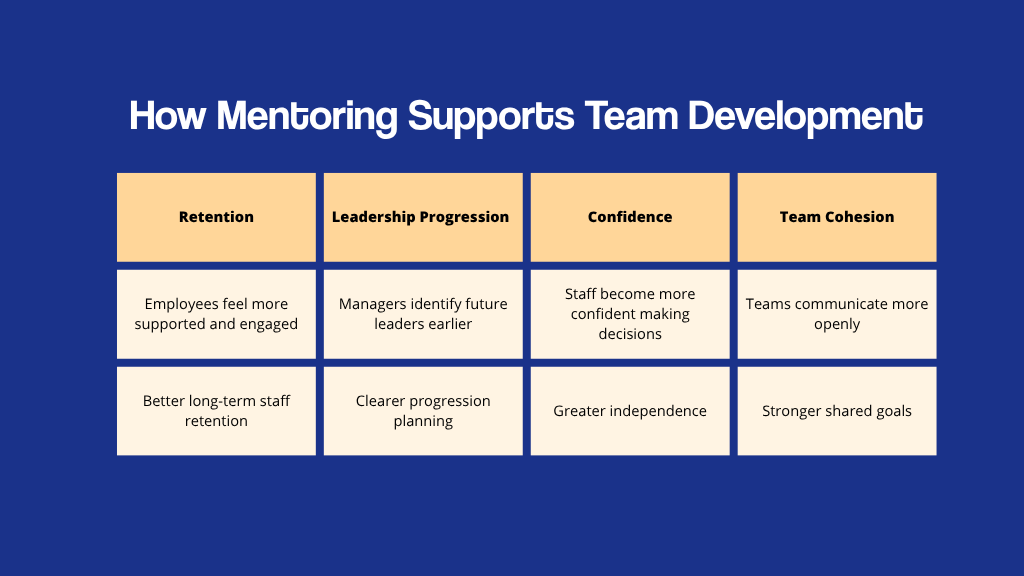
Mentoring helps employees feel supported while giving managers a clearer way to develop skills, prepare staff for progression and strengthen communication across the team.
Over time, consistent mentoring can improve retention, support leadership progression planning and help employees become more confident in taking ownership of their work. It also encourages stronger team cohesion by creating more open conversations around development, responsibility and long-term career goals.
For managers, mentoring also creates better visibility across the team. It becomes easier to identify employees who are ready for greater responsibility, who may need additional support and where future leadership gaps could appear.
When mentoring becomes part of everyday team development, progression feels more achievable for employees and businesses become less reliant on external recruitment to fill future leadership positions.
Supporting Career Changers & Internal Progression
Employees stepping into a different role internally often need just as much support as a new starter.
A mentor can help employees apply transferable soft skills in a new environment while giving them space to reflect on challenges as they adapt. This kind of guidance is often especially useful for employees moving into leadership roles for the first time.
For example:
- a senior administrator moving into team leadership
- an operational employee moving into a client-facing role
- a specialist employee taking on wider management responsibilities
- an employee joining from another industry or consulting firm
Mentors help employees build confidence gradually rather than expecting them to adjust immediately. This supports personal and professional growth while helping employees stay on track with their long-term goals.
It can also help organisations retain experienced staff who already understand the business rather than relying entirely on external recruitment to fill leadership gaps.
Choosing Who to Mentor in Your Team
Mentoring is often most effective when it starts before employees begin struggling or actively asking for support.
In many teams, development opportunities naturally go to the most confident employees or the people managers speak to most often. This can make it easy to overlook quieter employees with strong long-term potential or employees who are preparing for greater responsibility but have not yet fully developed the confidence to take the next step.
At the same time, progression planning is not always straightforward. Some employees actively push for promotion before they are ready, while others quietly take on more responsibility without recognising their own capability. Mentoring gives managers more opportunities to observe how employees think, communicate and respond to challenges over time.
Good mentoring also helps managers take a more proactive approach to development. Instead of waiting for performance concerns or promotion opportunities, employees can gradually build confidence through regular conversations, stretch responsibilities and ongoing feedback.
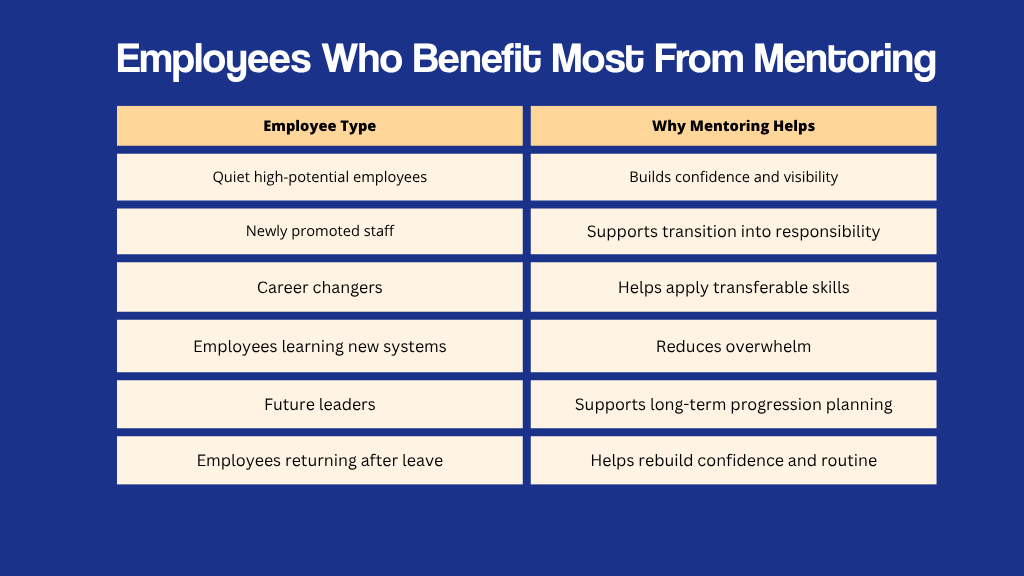
When mentoring becomes part of everyday team development, managers get a clearer understanding of future progression pathways across the organisation, while employees feel more comfortable talking about their career goals openly.
Develop Your Mentoring Skills With Carlton Training
Strong mentoring doesn’t happen by accident. While many managers already support employees informally, structured mentoring skills help those conversations become more effective, consistent and valuable over time.
At Carlton Training, our ILM-accredited mentoring qualifications are designed for managers, team leaders, HR professionals and experienced professionals responsible for supporting staff development. The Level 3 Award in Effective Mentoring is a good starting point for managers who are new to mentoring and want practical skills they can apply straight away. The Level 3 Certificate in Effective Mentoring goes further, helping managers develop stronger mentoring skills through workplace-based mentoring practice.
For more experienced leaders responsible for wider leadership development or mentoring across teams, the Level 5 Certificate in Effective Coaching and Mentoring supports more advanced mentoring and coaching approaches.
If your organisation is investing in staff development, progression planning or leadership mentoring for career development, improving mentoring skills can have a measurable impact across the team.
Find out more about our coaching and mentoring courses and book your place today.
Next ›‹ Previous
Back to Blog