June 3, 2026
How to Become a Plastering Assessor
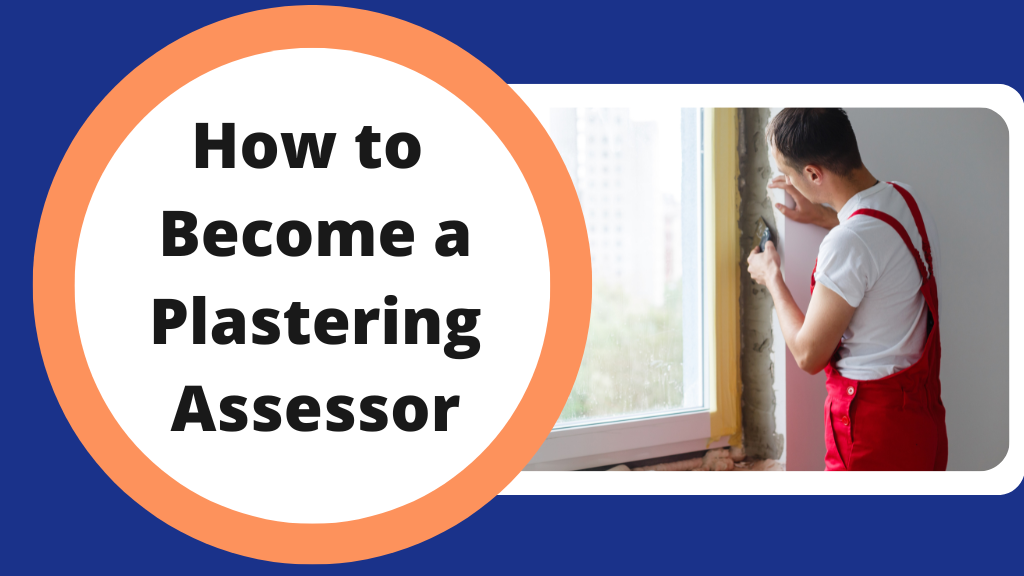
Years of plastering work can take a toll. Skimming ceilings, carrying boards, working to tight deadlines and keeping a clean finish all demand skill, stamina and focus. At some point, many experienced plasterers start thinking about what comes next. If you’re already involved with checking standards on-site or showing newer plasterers how to get things right, assessment could be a natural next step.
What does a plastering assessor do?
A Plastering Assessor checks that learners can complete plastering work to the required standard. This can include apprentices, NVQ learners or trainees working in a college workshop, training centre or live site environment.
Assessing Practical Plastering Skills
In practice, this means that you may watch a learner prepare a surface, mix materials, apply plaster, finish a wall or ceiling, carry out dry lining work or complete rendering tasks. You’ll look at the quality of their work, how safely they work, how they use tools and materials and how well they follow drawings, specifications or site instructions.
Checking Knowledge & Understanding
The role also involves checking what the learner understands. Being a competent plasterer is not only about achieving a smooth final finish. Learners need to understand preparation, timing, drying conditions, handling different materials, health and safety and why different methods are used for different jobs.
Reviewing Evidence & Giving Feedback
To build a clear picture of the learner’s ability, you might use workplace observation, questioning, professional discussions and portfolio reviews. You’ll then make an assessment decision, record the evidence and give feedback so the learner knows what they have done well and what they need to improve.
Although assessors work closely with learners, the role is different from teaching or training. A trainer may show someone how to build their skills. An assessor judges if those skills meet the required standard.
How to Become a Plastering Assessor
Build Your Plastering Experience
Before you can assess plastering learners, you need strong experience in the trade yourself. This is what allows you to recognise good workmanship, spot common mistakes and understand the pressures learners may face on-site.
Most employers and training providers will expect you to have worked as a plasterer for several years. Having a relevant plastering qualification is good, especially if you want to assess learners completing plastering NVQs or apprenticeships, but not always essential.
Your experience might already include solid plastering, dry lining, rendering, working from drawings, preparing surfaces, using different materials and following site health and safety requirements. This is important because learners will rely on your judgement. You need to know what good work looks like, when a method is suitable for the job and when a learner has not yet met the required standard. The exact experience you need will depend on the plastering courses you want to assess.
Get Your CAVA Level 3 Qualification
Once you have the right industry background, the next step is to complete the Level 3 Certificate in Assessing Vocational Achievement, often called CAVA.
This is the main assessor course for people who want to assess vocational learners in the workplace and in training environments. That makes it a good fit for plastering, where learners may be assessed on-site, in a college workshop or through an apprenticeship provider.
The CAVA assessor qualification teaches you how to plan assessments, use different assessment methods, make fair decisions and keep clear records. It also includes practical assessment work with real learners, so you can show that you’re able to assess properly.
Gain Experience Working With Learners
Many plasterers start building useful experience before they officially move into an assessor role. You may already be mentoring apprentices, checking a trainee’s finish, talking someone through safe working practices or helping newer workers understand what a good job should look like.
This kind of experience helps because assessors need to communicate clearly and give feedback in a way learners can act on. It can also help to shadow an experienced assessor, speak to local colleges or training providers and look for chances to support workplace learning before applying for assessor jobs.
What does the CAVA Assessor Course involve?
The Level 3 CAVA assessor qualification is designed to help you assess learners fairly, confidently and in line with qualification standards. It covers the theory behind assessment, the methods assessors use and the practical skills needed to assess real learners.
Learning the Principles of Assessment
You’ll start by learning how assessment works and what your responsibilities are as an assessor. This includes planning assessments, understanding assessment criteria, avoiding bias and making decisions based on evidence.
You’ll also learn how to keep records properly. This matters because assessment decisions need to be clear, consistent and easy for tutors, Internal Quality Assurers (IQAs), awarding organisations and, most of all, learners to understand.
Using Assessment Methods
The CAVA course also teaches you how to use different assessment methods. For plastering learners, this could include watching them complete practical tasks, asking questions, reviewing their portfolio or using witness statements from supervisors.
You’ll learn when each method is suitable and how to gather enough evidence before making a decision. For a plastering learner, one assessment might include observing their finish on a wall, then asking questions to check their knowledge of preparation, materials, drying times or health and safety.
Completing Practical Assessments
The practical part of CAVA is where you put your learning into action. You’ll assess real learners and record your decisions as part of your course portfolio.
This helps you build confidence before moving into assessor work. By the end of the course, you should understand how to plan an assessment, gather evidence, judge competence and give useful feedback to learners.
Where can a plastering assessor work?
Once you’re qualified, there are several places where your plastering experience and assessor qualification can be used.
Colleges & Training Providers
Further education colleges and private training providers often employ construction assessors to support learners working towards plastering qualifications. This can involve workshop-based assessment, portfolio reviews and progress checks with learners at different stages of their course.
In these settings, you may work alongside tutors, trainers and other construction assessors to help learners build the evidence they need for their qualification.
Apprenticeship Providers
Apprenticeship providers often need assessors who can visit learners in the workplace. As a plastering assessor, you may travel to different sites to observe apprentices carrying out real plastering tasks, speak with employers and check that evidence meets the required standards.
This route can suit plasterers who enjoy variety and want to stay working in live construction environments.
Construction Companies & In-House Training
Some larger construction companies run their own training programmes or support apprentices directly. In these roles, a plastering assessor could help monitor learner progress, check workplace competence and support staff development within the business.
This can be a good fit if you want to stay within a construction company while moving into a training or assessment-focused role.
Freelance & Combined Roles
Some assessors work freelance or combine assessment with other construction work. You might assess learners part-time, continue some plastering work or move into a mixed role that includes training, mentoring and assessment.
This flexibility is one reason many experienced tradespeople consider assessment. It allows you to use your site knowledge in a new way without having to leave the trade behind completely.
Career Progression After Becoming a Plastering Assessor
Becoming a Plastering Assessor can open up several career routes within construction training, further education and assessment. Some people stay focused on assessing plastering learners, while others use the role as a step towards wider responsibilities.
Construction Sector Assessor Roles
Once you’re qualified and experienced, you may be able to assess in other areas of construction. However, this depends on your own background. CAVA gives you the skills to assess, but you still need occupational competence in each subject area you assess.
For example, if you have experience across plastering, dry lining, rendering or wider site work, this may help you move into broader construction assessor roles. If you want to assess a different trade, you will usually need relevant qualifications and work experience in that area too.
Internal Quality Assurance (IQA)
Many assessors progress into internal quality assurance after gaining assessment experience. An Internal Quality Assurer, often called an IQA, checks that assessors are making fair and consistent decisions.
In this role, you may sample assessment records, observe assessors, support standardisation meetings and help training providers prepare for external quality checks. This route can suit assessors who enjoy supporting other staff and helping centres maintain high assessment standards.
To move into IQA, you would usually complete a Level 4 internal quality assurance qualification after gaining assessor experience.
Teaching & Training
Some plastering assessors later move into teaching or training roles. This may involve delivering practical sessions in a college workshop, supporting apprentices in a training centre or working as a trainer and assessor.
Assessing and teaching are closely linked, but they are not the same role. Assessing focuses on judging if a learner meets the required standard. Teaching focuses on helping learners build the skills and knowledge they need before assessment.
If you want to teach as well as assess, you may need a teaching qualification, such as the Level 3 Award in Education and Training.
Take the Next Step to Becoming a Plastering Assessor with Carlton Training
If you’re ready to use your plastering experience in a new way, the Level 3 Certificate in Assessing Vocational Achievement gives you a clear route into assessment.
Carlton Training’s CAVA course is designed for working professionals, so you can build your assessment skills while fitting your studies around your existing work. You’ll learn how to plan assessments, gather evidence, make fair decisions and give feedback to learners in workplace and training settings. You’ll also receive support from experienced tutors as you work through the course and complete your practical assessment requirements.
Start your assessor course with Carlton Training and take the next step towards becoming a qualified Plastering Assessor.
FAQs About Becoming a Plastering Assessor
Is CAVA the same as the A1 assessor course?
CAVA replaced the older A1 assessor qualification. Some employers and training providers still use the term A1 assessor course, but they are usually referring to the current Level 3 CAVA Certificate in Assessing Vocational Achievement.
Can I assess plastering NVQs and apprenticeships with CAVA?
Yes, CAVA can qualify you to assess learners in workplace and training environments. However, you also need the right plastering experience and qualifications for the courses you want to assess.
Do I need an NVQ in Plastering to become a Plastering Assessor?
Some employers and training providers will usually expect you to have a relevant plastering qualification, often an NVQ Level 2 or Level 3 in Plastering, along with strong site experience.
Do I need teaching qualifications to become a Plastering Assessor?
You don’t need a teaching qualification to become an assessor. The CAVA assessor qualification focuses on assessing learners against set standards.
If you want to teach plastering as well as assess it, you may need a teaching qualification, such as the Level 3 Award in Education and Training.
Can I work as a Plastering Assessor part-time?
Yes, many assessors work part-time, freelance or in mixed roles. Some continue with construction work alongside assessing, while others combine assessment with training, mentoring or teaching.
Do I need access to learners before starting CAVA?
You can start the CAVA course before you have learners in place, but you will need access to real learners during the course. This is because the practical part of CAVA requires you to carry out assessments and record evidence.
Next ›‹ Previous
Back to Blog