June 17, 2026
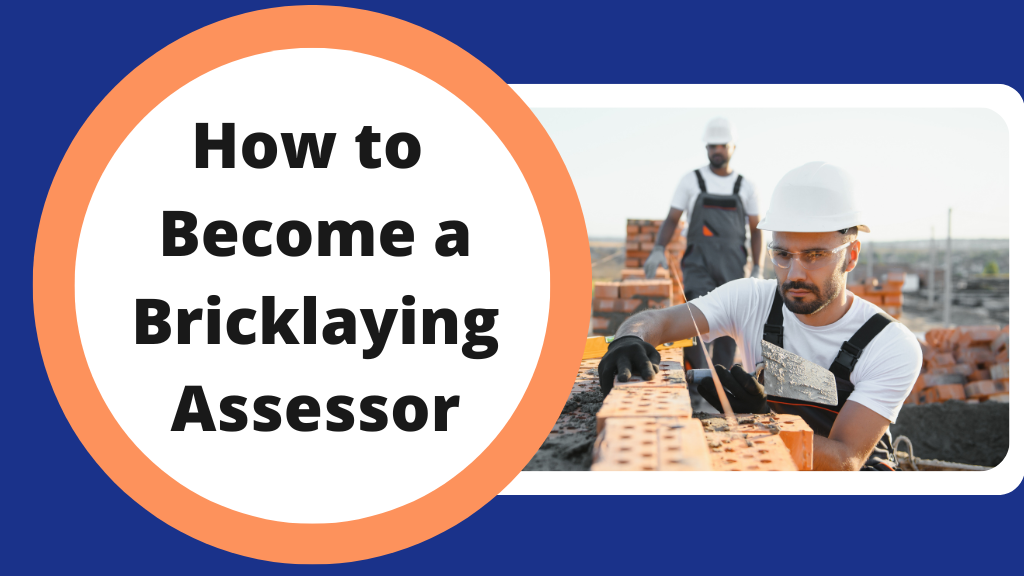
How to Become a Bricklaying Assessor
Are you thinking about coming off the tools, but don’t want to leave the construction industry behind completely?
For many experienced bricklayers, there comes a point where they’d like a new challenge while still using the skills and knowledge they’ve built over the years. You could already be supervising apprentices, checking standards on-site, or showing younger workers how to do things properly. After years in the trade, passing your knowledge on can become one of the most rewarding parts of the job.
Becoming a Bricklaying Assessor gives you a way to use that experience in a different role. Instead of laying bricks full-time, you’ll support learners working towards recognised bricklaying qualifications and apprenticeships, helping assess their skills in real working environments.
What does a Bricklaying Assessor do?
Assessing Practical Bricklaying Skills
A Bricklaying Assessor checks that learners can complete work to the required standard in real construction environments. This often involves assessing apprentices or NVQ learners working towards construction qualifications.
In practice, this means observing learners on-site or at a training centre while they carry out tasks like setting out, laying bricks and blocks, building corners and following health and safety procedures correctly. You’ll assess both the quality of their work and how they apply their knowledge in real-life situations.
Although assessors work closely with learners, the role is not the same as teaching. A construction assessor is responsible for judging if someone meets the required standard, rather than delivering lessons or demonstrations. You might end up doing both teaching and assessing, but remember that they are different things.
To do this properly, assessors use a range of assessment methods, including workplace observation, checking completed work, questioning, and portfolio reviews.
Reviewing Evidence & Giving Feedback
Assessors review portfolios of evidence, ask questions to confirm understanding and hold professional discussions with learners. The aim is to build a clear picture of their competence against the qualification criteria.
A large part of the role is making fair assessment decisions and keeping accurate records. You’ll also give feedback to help learners understand what they are doing well and where they still need improvement.
How to Become a Bricklaying Assessor
Build Your Industry Experience
Most Bricklaying Assessors will have several years of site experience. It can also be beneficial to have spent time supervising apprentices, leading jobs, or checking work quality – even if this is in a different area of construction.
Your expertise allows you to judge work properly, spot mistakes and give feedback based on real knowledge rather than just theory alone. Learners also tend to respond better to assessors who have worked in the trade themselves and understand the day-to-day realities of site work.
Get an Assessor Qualification
To become a qualified assessor, you’ll usually need the Level 3 Certificate in Assessing Vocational Achievement (CAVA).
This is the main assessor’s award used across vocational education and apprenticeships in the UK. It allows you to assess learners both in the workplace and in training environments, which makes it well-suited to construction and bricklaying assessments.
The course covers the principles of assessment, how to use different assessment methods, and how to carry out assessments fairly and consistently. It also includes practical assessment work with real learners.
Gain Experience Assessing Learners
One of the best ways to move towards becoming a Bricklaying Assessor is by getting involved in supporting learners before moving into a full assessment role.
Many assessors begin by mentoring apprentices on-site, checking work quality, helping newer workers improve their technique, or supervising practical tasks. This gives you experience explaining standards clearly and judging whether work meets the expected level.
It can also help to shadow a qualified assessor to see what the role involves day to day. Watching assessments take place in real workplace environments gives you a better understanding of how evidence is gathered, how feedback is given, and how assessment decisions are recorded.
It can also help to build connections with local colleges, apprenticeship providers or training centres delivering construction qualifications. Some experienced tradespeople begin by carrying out occasional learner observations or supporting workplace training alongside their normal role before moving into assessing more formally.
Because construction assessment is largely based around workplace observation, confidence working with learners and understanding qualification standards are important parts of becoming an assessor.
What bricklaying qualifications do you need?
To become a Bricklaying Assessor, you’ll need both industry experience and an assessor qualification. The construction experience or qualifications you already hold show that you’re occupationally competent in the trade, while the assessor qualification allows you to assess learners formally.
Most assessors will already hold bricklaying qualifications like an NVQ or apprenticeship at Level 2 or Level 3 in Bricklaying, along with several years of site experience. This means you’ll be able to judge work properly, spot mistakes, and give feedback based on real knowledge rather than theory alone.
In construction, there are often several ways to approach the same task depending on the site, materials, conditions, plans, deadlines, or access. A good assessor understands the wider application of knowledge and can judge when a learner is choosing an appropriate technique, method, or approach for the situation in front of them.
What does the CAVA course involve?
Learning Assessment Principles
The Level 3 CAVA course teaches you how to plan assessments, make fair decisions, and assess learners against the standards set by awarding bodies.
You’ll also learn the responsibilities assessors need to follow regarding record keeping, consistency, and quality assurance.
Using Assessment Methods
The course covers assessing competence in the work environment using practical assessment methods.
This includes workplace observations, professional discussions, questioning, and reviewing learner portfolios. Because construction assessment is largely on-the-job, these methods are widely used by construction assessors.
Completing Practical Assessments
As part of the qualification, you’ll assess real learners in workplace or training environments. This practical element helps you build confidence and apply your learning properly.
The Level 3 CAVA qualifies you to assess learners across construction trades like bricklaying, carpentry, plastering and plant operations.
Where can a Bricklaying Assessor work?
Colleges & Training Providers
Further education colleges regularly employ construction assessors to support learners working towards bricklaying qualifications and apprenticeships. Independent training providers and apprenticeship providers also employ assessors to carry out workplace visits, review learner progress, and complete assessments on-site.
Many of these roles involve working with apprentices completing construction qualifications while gaining practical experience on real jobs.
Construction Companies & Workplace Training
Some Bricklaying Assessors work directly for larger construction companies that deliver in-house training programmes for apprentices or new staff. In these roles, assessors help maintain standards within the business while supporting workforce development.
Because assessors understand both the trade and the qualification requirements, they can help employers make sure learners are developing the right practical skills alongside their site experience.
Freelance & Combined Roles
Some assessors choose freelance work, visiting different employers and learners across a region. This can provide more flexibility and variety, especially for experienced tradespeople who want to combine assessing with other work.
The role can also vary depending on the organisation. Some positions are mainly site-based, while others combine workplace visits with classroom or workshop assessment. Many assessors also combine assessing with teaching, training, or other construction-related roles.
Career Progression After Becoming a Bricklaying Assessor
Expanding Into Wider Construction Assessment
Some qualified construction assessors go on to assess across additional trades or specialist areas if they have the occupational competence and work experience in the area they wish to assess.
This could include areas linked to site management, construction site management, or other parts of construction and the built environment.
Because assessment qualifications are transferable across vocational education, becoming a construction assessor can create broader career opportunities over time.
Moving Into Internal Quality Assurance
Many people who become assessors continue developing their careers within assessment and quality assurance.
One common next step is moving into Internal Quality Assurance (IQA). An IQA checks assessment decisions made by other assessors and helps maintain consistency across qualifications and training providers. To move into these roles, you would normally complete a Level 4 quality assurance qualification.
Moving Into Teaching & Training
Some Bricklaying Assessors decide to move further into education and training over time. Completing the Level 3 AET Award in Education and Training (AET) can help if you want to deliver lessons as well as assess learners.
This can lead to roles within colleges, apprenticeship providers, or private training organisations where you work as both a trainer and assessor supporting construction learners.
Start Your Bricklaying Assessor Qualification with Carlton Training
Ready for a new challenge? Start your Level 3 CAVA with Carlton Training and take the next step towards becoming a qualified Bricklaying Assessor.
Our course is designed for working professionals, allowing you to study flexibly around your existing commitments while building practical assessment skills through real-world application. You’ll receive support from experienced tutors throughout the course, helping you build confidence as you work towards your level 3 assessor qualification.
Find out more about our assessor courses and book your place today.
FAQs About Becoming a Bricklaying Assessor
Is CAVA the same as the A1 assessor course?
Yes. The older A1 assessor course has now been replaced by the Level 3 Certificate in Assessing Vocational Achievement (CAVA). Many employers and training providers still use the term “A1”, but CAVA is the current recognised assessor qualification.
Can I assess construction NVQ and apprenticeships with CAVA?
Yes, the Level 3 CAVA qualifies you to assess learners completing construction NVQs and apprenticeships in workplace and training environments. This includes practical, on-the-job assessment across different construction trades.
Do I need teaching qualifications to become an assessor?
No, you don’t need teaching qualifications to become an NVQ assessor. Your assessor qualification allows you to assess learners against qualification standards.
Some assessors later complete teaching qualifications like the Level 3 AET Award in Education and Training (AET) if they also want to deliver lessons or work as a trainer and assessor.
Although the two roles work closely together, there is a clear difference between teaching and assessing. Teaching focuses on helping learners develop knowledge and skills, while assessing focuses on judging whether learners meet the required standard.
Can I work as an assessor part-time and also be a trainer?
Yes, many assessors combine assessment work with other roles within the construction sector. Some continue site work part-time, while others move into training, mentoring or teaching alongside assessing learners.
Working as both a trainer and assessor is common within apprenticeships and vocational education, particularly for experienced tradespeople with strong industry knowledge. If that’s a route you’re interested in, it’s worth understanding how the qualifications for training and assessing work together.
Do I need access to learners before starting CAVA?
You can begin the CAVA course before having access to learners, but you will need real learners to complete the practical assessment part of the qualification.
These could include colleagues, apprentices, trainees on-site or vocational learners working towards recognised qualifications.
Can bricklayers become college assessors?
Yes, many colleges and apprenticeship providers employ qualified construction assessors with real industry experience. Trade qualifications and site background are an important part of becoming a qualified construction assessor in further education.
Are bricklaying assessors also able to be construction assessors?
You can become a construction assessor as well as a bricklaying assessor if you have the relevant occupational competence and work experience. Some assessors expand into wider construction assessment areas like site management, plant operations, or assessing in other trades after gaining additional experience and qualifications.
Next ›‹ Previous
Back to Blog